

Homeowners often look for ways to improve their property. Some want a new fence for privacy. Others plan to add a shed, rebuild a garage, or widen the driveway. These upgrades can make a home more useful and more comfortable. However, many people forget one important step before building near the edge of their yard. They assume they already know where the property line sits. Often, they look at an old fence or a row of bushes and believe that marks the boundary. Unfortunately, that assumption can lead to problems. A property line survey helps homeowners understand where their property line actually is by showing the exact boundary of the lot. Because of that, it helps homeowners build with confidence while avoiding mistakes that could cross into a neighbor’s land.
Why Property Lines Can Be Hard to See in Chicago
Chicago has many older neighborhoods. In fact, some homes sit on lots created more than a century ago. Over time, original property markers can become buried, damaged, or lost. As a result, many homeowners cannot easily see where their land actually ends.
At the same time, Chicago residential lots are often narrow. Many measure only about 25 to 30 feet wide. Because of that, even a small mistake can place part of a structure outside the property line.
For example, a fence installed just a few inches too far could extend onto a neighbor’s yard. That might seem like a small issue at first. However, it can quickly lead to conflict between neighbors.
Therefore, understanding the exact boundary becomes important before starting any project near the edge of a property. In situations like this, a survey is often the only reliable way to confirm property boundaries before building near a lot line.
Why an Old Fence Is Not Always the Real Boundary
Many homeowners assume the fence marks the true property line. However, fences do not always sit on the legal boundary.
First, many fences were installed years ago without a professional survey. Previous owners may have guessed where the line was located. At the time, the fence might have seemed close enough.
Second, some fences sit slightly inside the property line on purpose. Homeowners sometimes leave space so they can repair or maintain the fence without stepping onto a neighbor’s property.
Third, yards change over time. Landscaping grows, structures shift, and improvements get added. Because of that, the visible edge of a yard may no longer match the legal boundary.
For these reasons, relying only on an existing fence can create mistakes when building something new. A property line survey provides a much clearer answer.
Where Boundary Mistakes Often Happen
Many common home projects happen close to the property line. Because of that, these projects carry the greatest risk of crossing into the neighboring lot.
Fence installation is one of the most common examples. Homeowners often replace an old fence with a new one in the same location. However, if the original fence was not placed correctly, the new fence may repeat the mistake.
Backyard sheds can also cause problems. Homeowners often place these small structures near the edge of the yard to save space. Without clear measurements, the shed may end up too close to the boundary.
Garages create another situation where accuracy matters. In many neighborhoods, garages sit close to alleyways or lot edges. When homeowners rebuild or expand a garage, they need to know exactly where the property line runs.
Driveway extensions can also cause confusion. Some homeowners widen their driveway to create more parking space. Yet if the extension moves too far toward the side yard, it could cross the boundary without anyone realizing it.
Because these projects happen so often, confirming the boundary before building can prevent costly problems later.
What a Property Line Survey Reveals
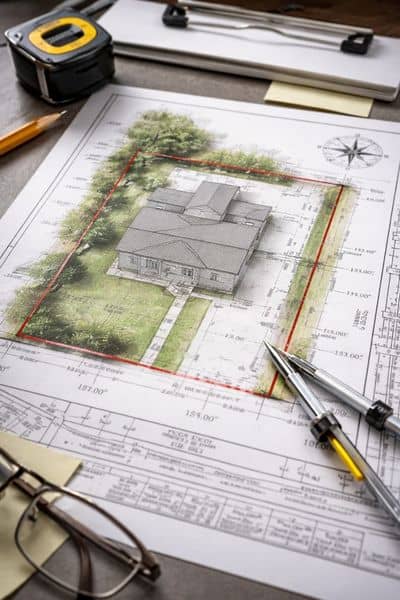
A property line survey gives homeowners a clear picture of their property boundaries. Surveyors study official records and then take careful field measurements to locate the true edges of the lot.
Once the work is complete, the survey shows exactly where the property begins and ends.
The survey also shows where structures sit in relation to the boundary. This includes things like houses, garages, fences, and other improvements.
Because of that information, homeowners can see whether an existing structure sits correctly or whether it comes close to the property line. That clarity helps homeowners decide where to place new improvements without crossing into the neighbor’s land.
How a Survey Helps Prevent Neighbor Disputes
Property line disagreements often start with small assumptions. A homeowner might believe the fence marks the boundary, while the neighbor believes the line sits somewhere else.
Without clear evidence, those disagreements can grow quickly.
However, a property line survey provides accurate measurements that both sides can rely on. Instead of guessing, homeowners can look at verified information that shows the exact boundary.
As a result, construction decisions become much easier. Contractors know where to place posts, structures, and improvements without risking a mistake.
Most importantly, confirming the boundary before construction helps protect relationships between neighbors.
A Situation Many Homeowners Face
Consider a homeowner replacing an old backyard fence. The fence has been there for decades, so the homeowner assumes it sits on the property line.
A contractor removes the old posts and begins installing the new fence along the same path.
Soon after, a neighbor raises concerns about the location of the new fence. At that point, the homeowner orders a property line survey.
The survey reveals that the old fence actually sat several inches inside the property line. If the new fence had continued in the same place, it might have crossed onto the neighbor’s property.
Because the survey revealed the correct boundary early, the homeowner could adjust the project before the mistake became expensive.
Why a Licensed Surveyor Matters
Determining a property boundary requires professional training and equipment. For that reason, only a licensed land surveyor can legally confirm the exact location of property lines.
Surveyors review property records, locate existing markers, and measure the land with specialized tools. Their work produces reliable results that homeowners and contractors can trust.
When questions about boundaries arise later, a professional survey also provides documentation that can help settle the issue.
Because of that, hiring a licensed surveyor helps protect both the property owner and the project.
Building With Confidence
Home improvements can make a property more comfortable, more useful, and more valuable. However, projects near the edge of a yard require careful planning.
A property line survey helps homeowners understand exactly where their land begins and ends. With that information, they can build fences, sheds, driveways, and garages without worrying about crossing into the neighbor’s property.
In a city where homes sit close together and a lot of space matters, that clarity makes a big difference.
By confirming the boundary before construction begins, homeowners protect their investment and avoid problems that could appear long after the project is complete.
