

Chicago is changing fast, and builders are trying to keep up. New mixed-use buildings—projects that combine homes, stores, offices, and parking—are rising in many neighborhoods. With this growth, a construction survey is now more important than ever. Builders, engineers, and lenders rely on accurate survey work to keep projects safe, legal, and on schedule. As Chicago prepares for even more development in 2026, the need for precise surveys continues to grow.
This trend became clear at the recent Real Estate Forum hosted by the Lincoln Park Builders of Chicago. More than a thousand builders, planners, and industry leaders joined the event. They talked about new housing rules, zoning updates, and the push for more affordable homes. Because of these changes, mixed-use buildings are now a major part of the city’s plans. And with tight spaces and more rules to follow, getting the layout right from day one is critical.
Chicago’s Development Boom and What It Means for Builders
Mixed-use buildings are popular because they support walkable streets and bring life to many areas. Instead of building only apartments or only stores, developers now blend everything in one site. This trend is strong in Chicago because older buildings need upgrades and open lots are harder to find. Developers want to make the most of every space, and the city supports projects that mix living, working, and shopping.
However, these projects need much more precision. Every part of the plan must match the approved design. Even one small mistake in staking the foundation or setting elevations can slow the entire job. Since mixed-use buildings often sit close to sidewalks, streets, and other structures, surveyors guide builders through each step so nothing shifts out of place.
Why Mixed-Use Projects Depend on Accurate Construction Surveys
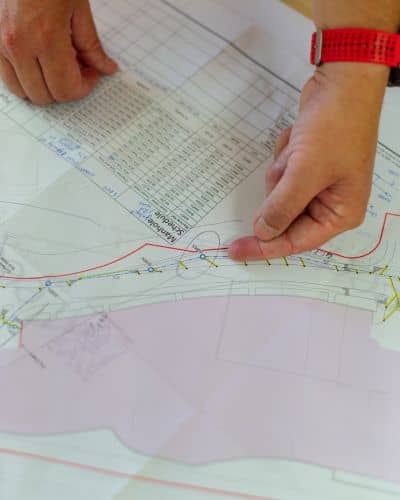
Mixed-use projects combine several types of spaces, which makes the job more complex. Because of this, the surveyor becomes one of the most important people on the site.
Tight Chicago lots leave almost no room for mistakes. A wall that is even an inch off can break setback rules or push too close to a neighboring building. Surveyors make sure the layout stays correct and safe.
Utilities also add challenges. Many neighborhoods have old pipes, cables, and abandoned lines underground. Builders often find problems only after digging starts. A construction survey helps locate known utilities and guides crews away from risky areas. This prevents delays and reduces danger.
Mixed-use buildings must also follow strict zoning and building codes. Since these projects combine different uses, inspectors need more detail. Surveyors confirm that every part of the plan meets local rules. This helps builders move through inspections without costly delays.
These buildings also need repeated staking during each phase. Surveyors mark the foundation, walls, utilities, grading, and even rooftop equipment. Without these updates, the building may drift off-plan. Fixing problems later is expensive and slows the project down.
The Cost of Skipping a Construction Survey
Some owners try to save money by cutting back on survey work. But in Chicago’s busy development climate, skipping a construction survey almost always causes problems.
Builders may get stop-work orders from the city. Foundations may be staked in the wrong place and need a redesign. Neighbors may question property lines. Drainage systems may fail because the grading was not done correctly. Lenders may hold back funds when the work does not match the approved plans.
A small mistake at the start can turn into a serious issue as the building grows. In mixed-use projects, every part of the structure connects, so one error affects everything else.
How Builders Can Stay Ahead During This Development Wave
Builders who plan ahead avoid many common problems. The best time to bring in a licensed land surveyor is before digging begins. Chicago’s market is busy, so surveyors book up fast. Planning early helps keep your project on schedule.
Getting a survey before excavation prevents foundation errors. Asking for staking at each major phase—such as framing, utilities, parking, and drainage—keeps the project aligned with the approved design.
Older neighborhoods often benefit from combining a topographic survey with construction staking. Uneven ground and hidden repairs can cause drainage issues. A topo map helps engineers design better site plans.
Working with a surveyor who understands urban infill is also important. Surveying tight spaces takes skill, and experience makes a big difference.
How Survey Firms Are Responding to Chicago’s Growth
Survey firms across the city already feel the higher demand. Many are hiring more staff and upgrading their tools. Newer equipment—like robotic total stations, drones, and lidar scanners—helps surveyors work faster while staying accurate.
Some firms now offer full service packages for developers, including ALTA/NSPS surveys, topographic surveys, construction staking, elevation certificates, and final as-built maps. Using one survey team for the whole project keeps things simple and reduces delays.
Why Property Owners and Developers Should Care
If you are planning a mixed-use project or updating a building, Chicago’s changing landscape affects you. A construction survey protects your budget and timeline. It helps catch errors early and gives the entire building team clear guidance. Since lenders and inspectors trust survey data, your project also moves through approvals faster.
In a crowded and fast-moving market like Chicago, accuracy is not a bonus—it is a must.
Conclusion:
Chicago’s rise in mixed-use developments is creating new chances for builders and property owners. As more buildings go up, the need for reliable surveying grows as well. A strong construction survey helps keep projects safe, on schedule, and ready for the city’s next steps. With good planning and skilled surveyors, your project can move forward with confidence and be part of the future.
