
If you’ve spent any time browsing real estate forums lately, you’ve probably seen the frustration. Buyers are calling out sellers for advertising fake lot sizes, especially on Reddit and other online spaces where people vent about bad property deals. It’s not just a minor annoyance. A lot that’s a few feet smaller than advertised can cost you thousands of dollars. That’s why a boundary line survey has quickly become one of the most important tools for homebuyers who want to protect themselves before closing.
The Rise of “Fake Lot Size” Complaints
Scrolling through real estate discussions online, one trend stands out: more buyers feel they’re being misled. Some listings claim a property is 7,000 square feet when the actual lot measures closer to 6,200. Others “forget” to mention that a shared driveway or utility easement cuts into usable space.
On Reddit, buyers often share stories about discovering these discrepancies too late. One user mentioned ordering a survey just two weeks before closing, only to find the advertised backyard was partially on a neighbor’s land. Another buyer admitted they skipped the survey to save money and ended up in a dispute over a fence that wasn’t theirs.
The message is clear: the old habit of trusting tax records, MLS listings, or even a seller’s word is no longer enough.
What a Boundary Line Survey Really Does for You
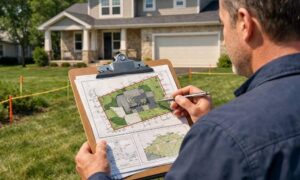
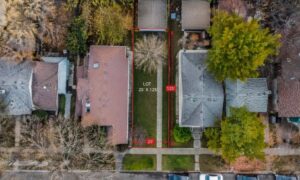
A boundary line survey is more than a drawing with lines and numbers. It’s a professional service done by a licensed land surveyor who measures and marks the exact edges of a property. This process is essentially a land boundary verification, where every corner and line is checked against legal descriptions to confirm exactly what you own.
When you’re buying a home, this is crucial. Without a survey, you’re relying on information that could be decades old or based on approximate county data. That kind of guesswork might work for a casual online listing, but it doesn’t hold up when you’re about to invest hundreds of thousands of dollars.
With a boundary line survey, you can:
- Confirm the lot size matches what’s advertised.
- Check if any neighbor’s fence, shed, or driveway crosses the line.
- Avoid paying for square footage that doesn’t legally belong to you.
- Use the survey as proof during negotiations if something looks off.
Why Buyers Should Pay Extra Attention
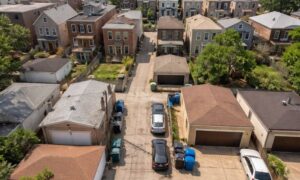
In Chicago and Cook County, this problem is even bigger. The official parcel maps available through the county are helpful, but they’re only approximations. They don’t show precise boundaries, and they’re not designed for legal use. Relying on them can give a false sense of confidence.
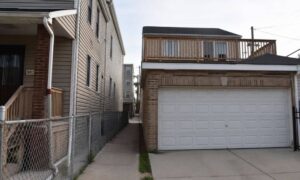
Add in the tight urban lots, shared gangways, and older neighborhoods where property records aren’t always clean, and you have the perfect recipe for disputes. A neighbor’s garage might inch over the line. A fence built decades ago might not match the deed. Or a seller might round up the lot dimensions to make the listing more attractive.
That’s where property boundary experts come in. They provide the clear, on-the-ground measurements that cut through confusion. A boundary line survey handled by professionals ensures you know exactly what you’re buying.
When Online Complaints Turn Into Real Costs
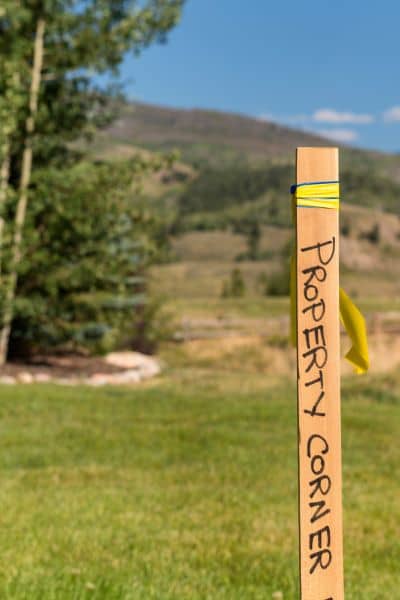
Let’s say you buy a property listed as a 50-foot-wide lot. Later, you discover the actual width is 48 feet because part of the side yard is technically in your neighbor’s deed. Two feet doesn’t sound like much, but in a city where every square foot counts, it can lower your resale value and limit your building options.
Another common issue is closing disputes. Attorneys, lenders, or title companies sometimes raise questions when the paperwork doesn’t match up. If you don’t have a current survey, you may face last-minute delays or even lose the deal.
For many buyers, the survey ends up being the document that saves them from overpaying or stepping into a legal mess.
Real-World Signs You Might Need a Boundary Line Survey Now
How do you know if your situation calls for a survey before closing? Here are a few red flags that come straight from buyer stories online:
- The lot size looks too perfect. Numbers like “7,500 sq. ft.” often get rounded up, which can be misleading.
- The seller avoids showing documents. If they won’t provide an updated survey, there’s usually a reason.
- Neighbors hint at disputes. A casual comment like “that fence has always been an issue” is a sign to check.
- Your lender or attorney raises concerns. If professionals in the process recommend a survey, listen to them.
These aren’t rare scenarios. They’re becoming more common as buyers share experiences online and others learn to watch out for the same tricks.
The Survey as Negotiation Power
Think of a boundary line survey as both a shield and a sword. On one hand, it protects you from being tricked into buying less land than you expected. On the other hand, it gives you leverage.
If the survey proves the lot is smaller, you can renegotiate the price or require the seller to fix the listing. If everything checks out, you walk into closing with peace of mind. Either way, you’re in a stronger position.
Why It’s a Must-Have, Not a “Nice-to-Have”
Some buyers still view surveys as optional, but that mindset is fading fast. With “fake lot sizes” being exposed online, more buyers are realizing the risk is too high. Spending a little extra upfront for a professional survey can save thousands later.
And unlike many documents in a closing packet, a boundary line survey is something tangible. It’s proof, backed by fieldwork, that defines exactly what you own.
Final Thought:
The online complaints are a warning sign for anyone entering the market. Sellers and listings may not always tell the full story, but a boundary line survey does.
If you’re buying in an area where lots are tight and property lines can be messy, the need for a survey is even greater. Don’t rely on assumptions, approximations, or promises—get the facts before you close. At the end of the day, it’s not just about square footage; it’s about knowing exactly where your property begins and ends and making sure you’re paying for what’s truly yours.