Buying land sounds simple. You see a low price, a clean map, and a good location. Then you assume the deal makes sense. However, recent events in Chicago show that land deals can fall apart fast when buyers rely on paperwork alone. A failed vacant lot auction in Chicago created headlines and raised serious questions about how land gets valued and sold. Large groups of parcels looked good on paper. Yet expectations and reality did not match. As a result, the deal collapsed and triggered legal action. While most buyers never purchase hundreds of lots at once, the lesson still applies to single-lot buyers, small developers, and investors. Before you buy land, you need facts from the ground — not just numbers from a file. That is exactly where a due diligence survey makes a difference.
When Cheap Land Is Not Really Cheap
Discount land always attracts attention. Investors, builders, and even homeowners look for underpriced parcels. At first glance, a listing may show the right size, the right zoning, and the right price. Still, many hidden problems do not appear on listing sheets.
For example, a parcel might:
- Lack legal access
- Overlap a neighbor’s boundary
- Sit partly inside an easement
- Have encroachments like fences or sheds
- Include unusable slopes or drainage paths
- Conflict with setback rules
- Differ from the legal description
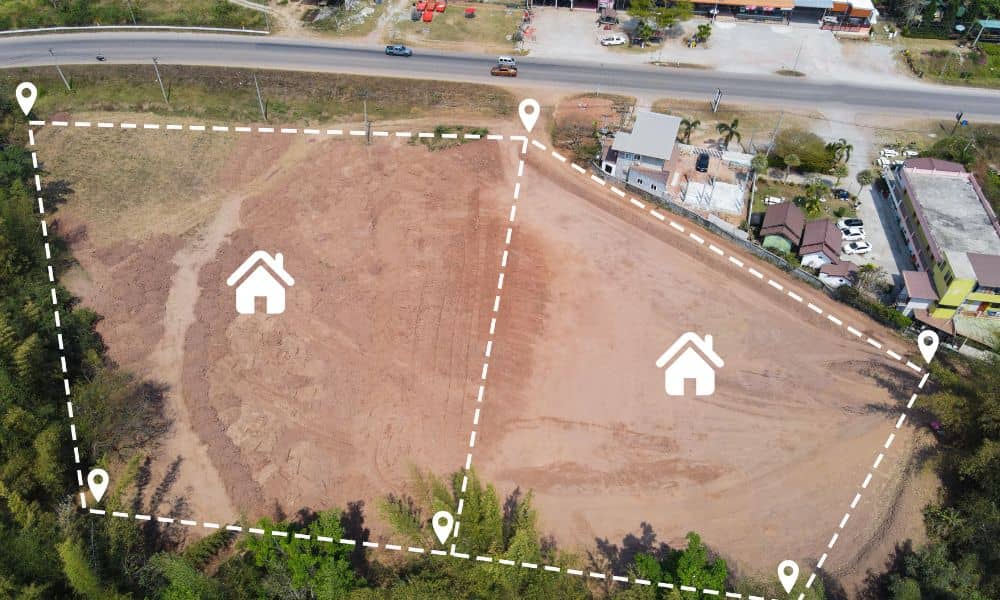
Meanwhile, online parcel maps often show only rough shapes. They help with browsing, but they do not prove boundaries. Therefore, buyers who trust map graphics alone take a real risk.
A low price does not protect you from a bad parcel. Verified land data does.
What a Due Diligence Survey Actually Does
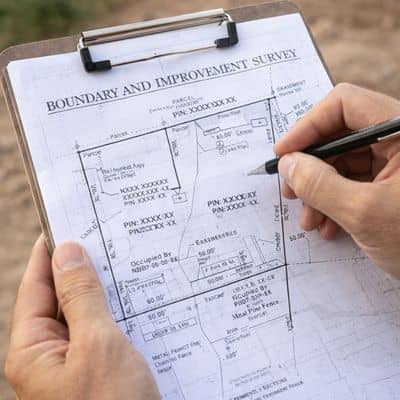
Now let’s keep this simple. A due diligence survey checks whether the land matches the story behind it. It gives you measured, field-verified facts before you commit money.
Instead of guessing, you get answers.
A due diligence survey typically reviews:
- Boundary location
- Parcel dimensions
- Access routes
- Visible encroachments
- Easements that affect use
- Occupation lines like fences and walls
- Conflicts between records and field evidence
- Buildability concerns
In other words, it answers the most important buyer question:
“Can I really use this land the way I plan to?”
That clarity changes decisions. Sometimes it confirms a good deal. Other times it prevents costly mistakes.
Why Appraisals and Listings Are Not Enough
Many buyers trust appraisals and broker sheets. Those tools help — but they do not replace a survey.
An appraisal gives a value opinion. It does not verify boundary lines. A listing describes features. It does not measure them. A GIS map shows shapes. It does not establish legal corners.
By contrast, a survey measures and verifies conditions on site.
Therefore, when a large land sale fails, the root cause often links to ground truth problems — not marketing errors. Buyers discover limits, conflicts, or access issues too late. Consequently, the numbers stop working.
A due diligence survey moves that discovery to the front of the deal — where it belongs.
How This Connects to the Chicago Lot Auction Story
The recent Chicago lot auction situation shows how fast land expectations can break down. Large parcel bundles looked workable as a group. However, bulk packaging often hides lot-by-lot differences.
Some parcels may work well. Others may not support building at all.
For instance, one lot might have clean access, while the next sits behind utility rights. One might meet setback rules, while another fails width requirements. Yet auction buyers often see them as equal units.
That assumption creates trouble.
A due diligence survey approach — even at a screening level — helps separate usable parcels from risky ones. As a result, buyers price land correctly and avoid surprises after closing.
Real Situations Where Buyers Need a Due Diligence Survey
This does not apply only to big city auctions. In fact, everyday buyers run into the same problems.
Consider these common cases:
A small developer buys two side-by-side lots for new homes. Later, they learn one lot loses buildable width due to an easement.
An investor buys a “cheap” infill parcel. Then they discover no legal driveway access exists.
A commercial buyer plans a small retail pad. However, setback lines cut the buildable area in half.
A homeowner buys vacant land for a future house. Afterward, a neighbor claims the fence line sits wrong.
Each case starts with confidence. Each problem appears after money moves. A due diligence survey shifts that timeline forward.
When You Should Order a Due Diligence Survey
Timing matters. Buyers often wait too long. Instead, order a due diligence survey before final commitment whenever risk exists.
That includes:
- Vacant land purchases
- Auction properties
- Tax sale parcels
- Development sites
- Multi-lot packages
- Irregular shaped parcels
- Land near alleys or shared drives
- Properties with many title exceptions
Even experienced investors use this step. They know land risk hides below the surface.
What the Process Looks Like
Good news — the process stays straightforward.
First, you provide the parcel address or PIN. Next, the surveyor reviews records and available documents. Then, field crews verify conditions on site. After that, the surveyor compares field data with legal descriptions and occupation lines. Finally, you receive findings and mapped results.
You can then decide with confidence.
Moreover, you can ask questions before closing — not after.
Cost Versus Consequence
Some buyers hesitate because of the cost. That reaction makes sense at first. Still, compare the numbers honestly.
A due diligence survey costs far less than:
- Buying unusable land
- Redesigning a project
- Fighting a boundary dispute
- Losing a permit window
- Holding dead property
Therefore, the smart comparison is not survey cost versus zero. The real comparison is survey cost versus deal failure.
One protects the purchase. The other gambles on it.
The Bottom Line for Land Buyers
The Chicago lot auction story highlights a simple truth: paper land and real land are not always the same. Numbers can look perfect while field conditions tell a different story.
So, smart buyers verify first and celebrate later.
A due diligence survey gives you measured facts, real boundaries, and usable insight before you commit funds. That step protects your budget and your project plan. Most importantly, it turns uncertainty into informed choice.
Before you buy land — especially discounted or bundled parcels — get the ground truth. That is how good land deals stay good.