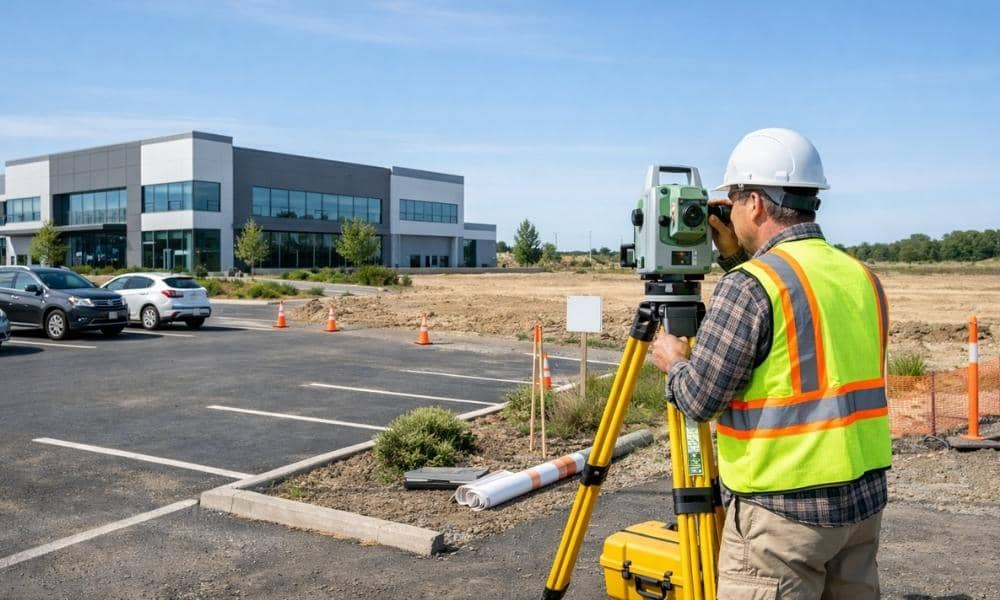
A full parking lot costs you customers. For developers, the fix is not always buying more land. Most of the time, the answer is already on the property you own. A commercial property surveyor helps you find it.
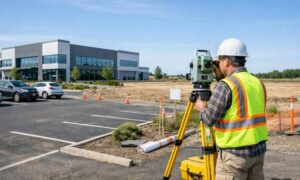
Before any expansion begins, a surveyor checks what is actually on the site. Not old blueprints. Not what someone remembers. What is physically there right now.
Why Growing Businesses Are Reworking Existing Parking Areas Instead of Buying More Land
Land in Chicago is not cheap. Buying a nearby parcel takes time, money, and paperwork. Most developers would rather put that budget toward the project itself.
Working with the land you already have is often the better choice. A commercial property surveyor checks the site and shows how much usable space is available right now.
Here is why this approach works:
- Open land near busy commercial areas is hard to find
- Zoning approvals for new parcels can take months
- Your existing utilities and access points are already in place
Surveyors measure the site as it stands today. That gives the design team real numbers before anyone starts drawing plans.
Finding Hidden Opportunities Within Older Commercial Sites
Older Chicago properties often have more room than they appear to. Small changes over the years leave behind spaces that no longer serve a purpose.
A commercial property surveyor helps spot these areas:
- Large landscape strips that were required under old zoning rules
- Old loading zones from tenants who have moved out
- Drive aisles that lead nowhere useful anymore
- Extra pavement around dumpsters or equipment pads
These spaces add up fast. A survey shows their exact size, slope, and location. That gives your design team real choices instead of guesses.
Some older properties have room for 15 to 30 extra parking stalls once a survey is done. The number depends on the site. But you cannot find extra space until you measure it.
Locating Utilities and Site Features That Could Influence New Parking Layouts
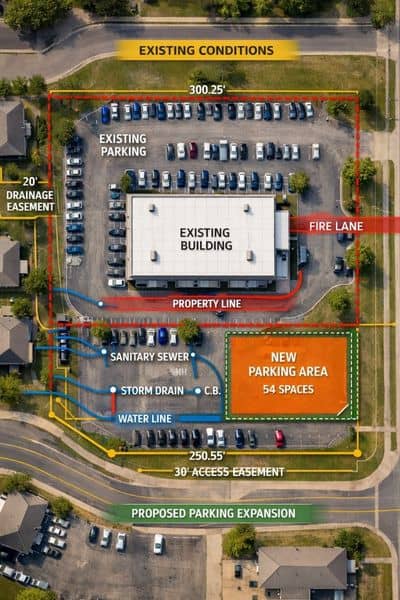
Parking expansion is not just about paving open space. Every commercial site has features above and below ground that affect where new stalls can go.
A commercial property surveyor finds and maps:
- Storm drains and catch basins that cannot be blocked
- Underground utility lines including gas, electric, water, and phone
- Transformers and vaults that need clear access at all times
- Fire lanes that must stay open under Chicago Fire Department rules
- Service areas tied to tenant deliveries or daily operations
Missing one of these during design is expensive. A layout that ignores a buried utility line may need to be fully redesigned once construction starts. That costs money and adds weeks to the project.
Survey data catches these problems early. Early is always cheaper.
Understanding How Shared Access and Neighboring Properties Can Affect Expansion Plans
Many commercial sites share driveways or access paths with nearby properties. These agreements are often on record but are not easy to see on the ground.
A commercial property surveyor reviews recorded documents and locates shared features such as:
- Cross-access easements that let traffic move between parcels
- Shared parking agreements that control how spaces can be used
- Common drive aisles that serve more than one property owner
Building into one of these areas without checking first leads to legal problems. Neighboring owners have rights that cannot be blocked, even during construction.
Surveyors mark these boundaries clearly. That lets the design team plan around shared access from day one, not after a conflict has already come up.
How traffic moves on the site also matters. A parking layout that looks good on paper can fail in real life if it blocks the natural flow of vehicles. Survey data shows how traffic actually moves before the design is locked in.
Using Accurate Site Information to Support Smoother Commercial Redevelopment
Every person on a redevelopment project needs to start from the same set of facts. Architects, engineers, and contractors all make decisions based on site measurements. When those numbers do not match, problems follow.
A commercial property surveyor gives the whole team one reliable source of information. That includes:
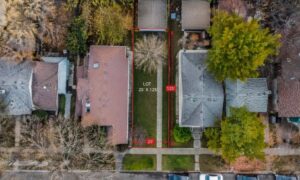
- Exact property lines and boundary locations
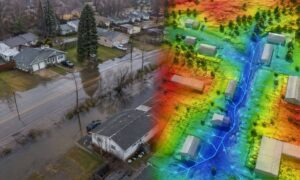
- Elevations and slopes across the site
- Locations of utilities, easements, and existing structures
- Distances to nearby buildings and public rights-of-way
When everyone uses the same verified data, redesigns happen less often. Teams coordinate better. City plan reviews go faster because the drawings match real conditions.
In Chicago, commercial permits can be complex. Submitting accurate plans from the start cuts down on back-and-forth with reviewers. That alone can save weeks.
Skipping the survey to save time usually costs more time in the end.
Frequently Asked Questions
1. Why should I hire a commercial property surveyor before expanding a parking lot?
A surveyor documents the site accurately, including boundaries, utilities, slopes, and easements. That information prevents design mistakes and helps the project move through permitting faster.
2. What does a commercial property surveyor look for during a redevelopment project?
Surveyors find property lines, underground utilities, drainage features, fire lanes, shared access areas, and existing structures. All of these affect where new parking can go.
3. Can an older commercial property support additional parking spaces?
Many can. Older sites often have oversized landscape areas, unused loading zones, or leftover pavement that can be reused. A survey shows these opportunities with accurate measurements.
4. How do utility lines and easements affect parking lot expansion plans?
Utilities limit where you can pave and where vehicles can park safely. Easements may block construction in certain areas entirely. A survey identifies both before design begins.
5. When should a commercial property surveyor be brought into the redevelopment process?
As early as possible. Survey data supports the feasibility study, the design phase, and the permit application. Bringing in a surveyor after design has started often means paying for revisions that could have been avoided.